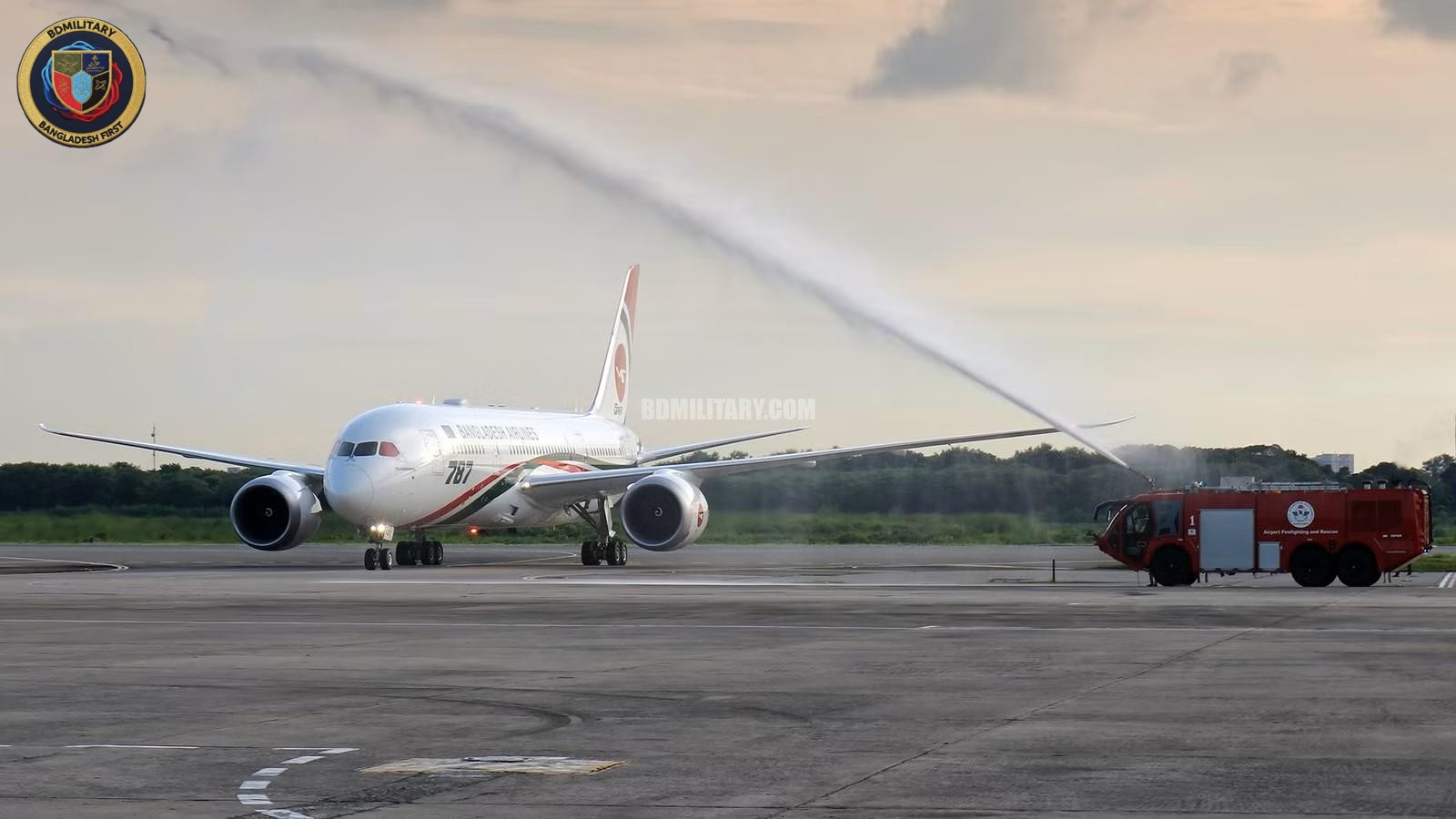
Just ten days before Bangladesh’s 13th National Parliamentary Election, scheduled for 12 February, the government is moving swiftly to sign a major aircraft procurement deal with US aviation giant Boeing, valued at around BDT 37,000 crore (USD $3.7 billion). The agreement involves the purchase of 14 aircraft by Biman Bangladesh Airlines and is officially presented as part of efforts to reduce Bangladesh’s trade deficit with the United States.
According to Biman and government sources, negotiations have accelerated sharply in recent days, with preparations under way to sign the long-term contract within the current week, subject to Boeing’s final response. If all proceeds as planned, the deal could be concluded before the election.
At the last moment, Biman has sent an urgent letter to Boeing’s Seattle headquarters seeking an additional 10 per cent discount on the total contract value. However, officials familiar with the negotiations say Boeing has already offered its maximum discount, making further concessions unlikely. It remains unclear whether the deal will proceed if the additional discount is not granted.
The proposed agreement includes the purchase of eight Boeing 787-10 Dreamliners, two Boeing 787-9 Dreamliners and four Boeing 737-8 MAX aircraft. Biman’s Managing Director and Chief Executive Officer, Md Shafiqur Rahman, confirmed that the procurement process is nearing completion.
“The process to purchase 14 aircraft from Boeing is almost finalised. Boeing’s final proposal is currently under review. After verification, it will be sent back to Boeing. Once their final consent is received, the proposal will be placed before Biman’s Board of Directors, following recommendations from the National Negotiation Committee. After board approval, the formal agreement will be signed,” he said.
Senior officials noted that the interim government had earlier committed to purchasing up to 25 Boeing aircraft as part of broader trade and diplomatic engagements with Washington. Following technical and financial evaluations, Biman decided to proceed initially with 14 aircraft.
Despite acknowledgement of the need for fleet modernisation, aviation experts and insiders have raised concerns over the timing of the deal. Negotiations had progressed gradually for months but gained sudden momentum after the election date was announced. A senior Biman official, speaking on condition of anonymity, said earlier plans focused on careful negotiations over pricing, pilot training and delivery timelines, but with the election approaching, the priority has shifted to signing the agreement as quickly as possible.
Experts also point out that although prices are being set based on 2024 valuations, aircraft deliveries are expected between 2031 and 2035. As a result, the current government will not benefit operationally from the deal, while Biman may face long-term financial risks due to inflation and potential currency depreciation at the time of delivery.
Biman currently operates 19 aircraft on 22 international routes. While approvals have been secured for new routes including Colombo, Manama and Sydney, aircraft shortages have forced the airline to suspend operations on the Manchester route, even as flights to Karachi resume.
Officials admit that even if the USD 3.7 billion deal is signed, Biman’s immediate capacity crisis will not be resolved. The airline has requested Boeing to lease four aircraft during the interim period, but so far has received only verbal assurances, with no written commitment.
Biman’s General Manager (Public Relations), Bosra Islam, said, “We hope that when our new aircraft arrive, our route network will expand accordingly.”
Just ahead of the expected agreement, Biman’s Board of Directors has been reconstituted. Newly appointed members include National Security Adviser Dr Khalilur Rahman, Chief Adviser’s Special Assistant Faiz Ahmed Taiyeb and Senior Election Commission Secretary Akhtar Ahmed. Civil Aviation and Tourism Adviser Sheikh Bashir Uddin has been appointed as the new board chairman.
European aircraft manufacturer Airbus also intensified its efforts to secure the deal. Diplomats from France, Germany, the United Kingdom and the European Union lobbied for Airbus to be given reasonable consideration. During a visit to Dhaka in September 2023, French President Emmanuel Macron stated that Bangladesh had committed to purchasing ten large aircraft from Airbus.
However, Biman ultimately favoured Boeing. Responding to questions on Airbus’s proposal, Md Shafiqur Rahman said Biman’s technical evaluation committee found Boeing’s offer to be more suitable for the airline’s operational requirements.
Former Biman board member and aviation analyst Kazi Wahidul Alam said signing the Boeing agreement sooner could be beneficial, provided it safeguards Biman’s interests. He noted that deliveries are expected after 2031 and stressed the need to bring them forward if possible, warning that excessive haste should not undermine the airline’s long-term financial and operational stability.
As the election draws closer, the scale, timing and long-term implications of the Boeing deal continue to fuel debate, raising questions about governance, accountability and strategic planning in Bangladesh’s civil aviation sector.
Aircraft Purchase and Route Expansion
Aircraft to be Purchased from Boeing
| Aircraft Type | Variant | Quantity | Intended Role |
|---|---|---|---|
| Boeing 787 Dreamliner | 787-10 | 8 | Long-haul, high-capacity international routes |
| Boeing 787 Dreamliner | 787-9 | 2 | Medium- to long-haul international routes |
| Boeing 737 MAX | 737-8 | 4 | Short- to medium-haul regional and international routes |
| Total | 14 aircraft | Fleet modernisation and route expansion |
Current and Planned Route Network
| Category | Routes |
|---|---|
| Current international routes | 22 routes operated with 19 aircraft |
| Newly approved routes | Colombo, Bahrain, Sydney |
| Recently resumed route | Karachi |
| Suspended due to aircraft shortage | Manchester |
| Planned expansion regions | East Asia, Europe, United States |

M.Z. Rahman is a distinguished defence and aerospace industry veteran turned strategist, with over two decades of experience in regional security, military modernisation, and strategic policy. Holding a Master of Arts in International Relations and Security Studies from Waikato University, New Zealand, he has contributed extensively to leading think tanks and defence journals worldwide. As Chief Editor of BDMilitary, Rahman drives the editorial vision, delivering authoritative, rigorously researched insights that reflect the latest trends in defence and geopolitics. His work integrates industry expertise with strategic foresight, establishing him as a respected voice in global defence strategy.