The Bangladesh Army has initiated a comprehensive realignment of its external military partnerships and force modernisation strategy, moving to downgrade long-standing training and cooperation arrangements with India and Russia while steadily reducing reliance on Russian-origin military hardware.
The shift was deliberated during a two-day conference of general and formation commanders held on 25–26 January at the Army’s Multipurpose Complex in Dhaka Cantonment. One of the most consequential agenda items was a reassessment of overseas officer training programmes and the broader framework governing military-to-military engagement.
Under the revised policy, the dispatch of Bangladeshi officer cadets to Indian and Russian military institutions will no longer be routine or preferential. Instead, such placements will be assessed strictly on a case-by-case basis, depending on bilateral relations, the depth of military cooperation, and the financial and institutional terms offered by host nations. Defence sources confirmed that this approach is intended to downgrade training ties with New Delhi and Moscow.
This marks a notable departure from previous practice. For decades, Russian and Indian military academies were among the most favoured destinations for Bangladeshi officers, offering advanced command, staff and specialised technical training. These exchanges formed a core pillar of broader defence cooperation, particularly with Russia, which has historically been one of Bangladesh’s principal suppliers of major military platforms.
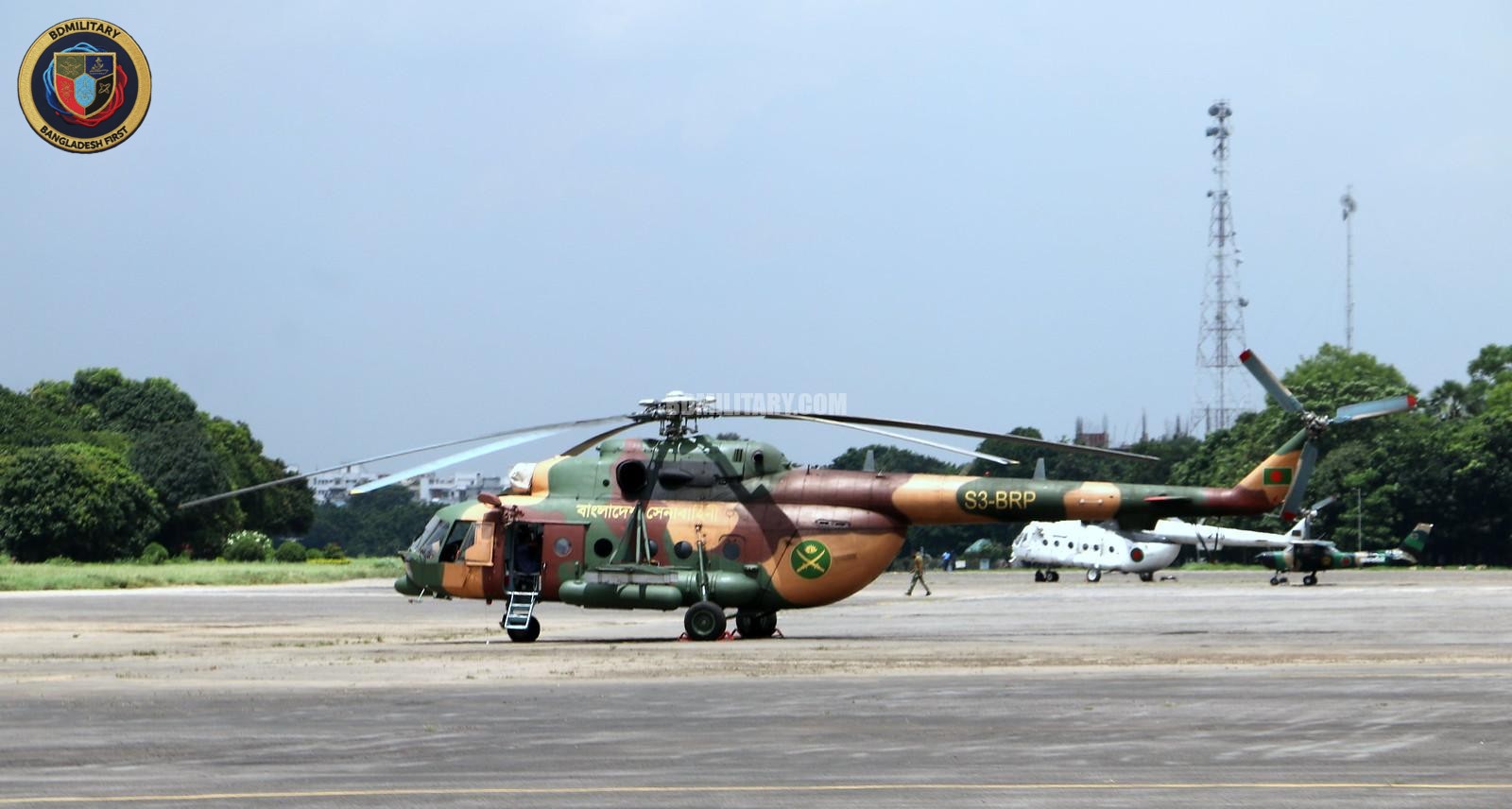
Parallel to the training policy shift, the Bangladesh Army is also moving away from Russian-origin military hardware across several key capability areas. The Army currently operates a substantial inventory of Russian and Soviet-designed equipment, including BTR-80 armoured personnel carriers, Metis-M1 anti-tank guided missile systems, and Mi-171Sh medium-lift combat support helicopters. These platforms have formed the backbone of Bangladesh’s mechanised infantry, anti-armour and rotary-wing transport capabilities for decades.
Defence officials indicated that these systems will be gradually replaced or supplemented by Western and Chinese alternatives as part of a phased force modernisation programme. Among the systems under consideration or already being introduced are NATO-standard anti-tank guided weapons such as the JAVELIN, as well as Western rotary-wing platforms including the UH-60L Black Hawk medium-lift utility helicopter. Chinese and Turkish-origin weapons and support systems are also expected to play an expanding role in future procurement plans.
Several factors are driving this transition. The ongoing war in Ukraine has disrupted Russian defence supply chains and raised concerns over long-term sustainment, spare parts availability and delivery timelines. In addition, the overthrow of the Awami League government led by Sheikh Hasina in August 2024 has prompted a review of defence procurement and partnership decisions taken under the previous political leadership.
Russia’s limited willingness to permit meaningful transfer of technology has also emerged as a critical constraint. This has conflicted with Bangladesh’s growing emphasis on indigenous defence production and local industrial participation, aimed at reducing long-term dependence on imported platforms. In contrast, Western suppliers are perceived as offering greater scope for interoperability, lifecycle support, and selective technology cooperation.
The Bangladesh Army’s increasing preference for NATO-standardised equipment reflects a broader strategic orientation towards interoperability with Western forces, particularly in the context of multinational exercises, UN peacekeeping operations, and potential coalition deployments. Cost effectiveness and sustainment economics have also featured prominently in recent procurement assessments.
By contrast, the material impact of downgrading engagement with India is expected to be limited. The Bangladesh Army does not operate Indian-manufactured weapons or major platforms, and defence-industrial ties remain non-existent. However, India has played a role in non-material military cooperation.
Bangladesh has regularly sent officer cadets to Indian military academies under joint cooperation arrangements, conducted annual bilateral exercises with the Indian Army, and hosted Indian instructors at Bangladeshi military institutions. Defence sources acknowledged that these activities may be affected by the revised policy, particularly if training exchanges and institutional cooperation are further curtailed.
During the January conference, alternative training and cooperation partners—including Pakistan, the United Kingdom, the United States and China—were discussed as part of a diversified and more strategically balanced engagement model. These countries already host Bangladeshi officer cadets and are viewed as offering training frameworks better aligned with Bangladesh’s evolving doctrinal, technological and interoperability requirements.
Analysts assess that the combined downgrading of training ties and the gradual replacement of Russian-origin platforms signal a deliberate effort by the Bangladesh Army to reduce strategic dependency on legacy partners while enhancing operational flexibility and long-term autonomy. While the revised posture does not amount to a complete disengagement from either India or Russia, it represents a clear recalibration of priorities.
Bangladesh Army officials emphasised that operational effectiveness, interoperability, cost efficiency and national interest will remain the guiding principles of future engagement and procurement decisions, as the force adapts to changing regional dynamics and an increasingly complex global security environment.

Khaled Ahmed is a seasoned former intelligence analyst and military expert from the Netherlands, bringing over 15 years of specialised experience in operational intelligence, threat analysis, and strategic defence planning. Having served in high-level, classified roles within Dutch military intelligence, he possesses rare expertise in European security architecture, NATO doctrine, and asymmetric warfare. Khaled’s deep operational insight and international perspective enable him to deliver precision-driven intelligence analysis and forward-looking strategic forecasts. A trusted contributor to high-level risk assessments and security briefings, he offers readers clarity on complex defence and security challenges. Khaled leads the National Security and Fact Analysis sections at BDMilitary. He holds a Master’s degree in International Relations from the University of Groningen, The Netherlands, and is fluent in Dutch, French, and Arabic — combining linguistic dexterity with operational expertise to analyse security issues across cultures and regions.