The recent posture of German Ambassador Rüdiger Lotz has ignited deep concern across Dhaka’s strategic community. His thinly disguised warning—that Bangladesh’s wider relationship with Europe could be affected simply because Dhaka chose not to proceed with a non-binding Airbus pledge—was not routine diplomatic commentary. It was an unmistakable signal of pressure, amplified by the highly unusual spectacle of several European embassies uniting to lobby aggressively for Airbus aircraft sales to Biman. The message behind this coordination is far more concerning than the aircraft themselves: foreign actors are willing to leverage diplomatic networks to influence Bangladesh’s sovereign procurement decisions.
That Europe attempted to apply this level of pressure over a civil aviation purchase raises a far more alarming question: if they behave this way for a handful of jetliners, how much coercion would they be prepared to exert over a multi-billion-dollar defence acquisition? The Airbus incident has exposed a strategic playbook, one that seeks to normalise external influence over Bangladesh’s critical procurement pathways. It was not merely salesmanship; it was a test of Bangladesh’s resolve. Dhaka’s refusal was necessary—and now stands as proof that Bangladesh is no longer willing to quietly comply with such manipulation.
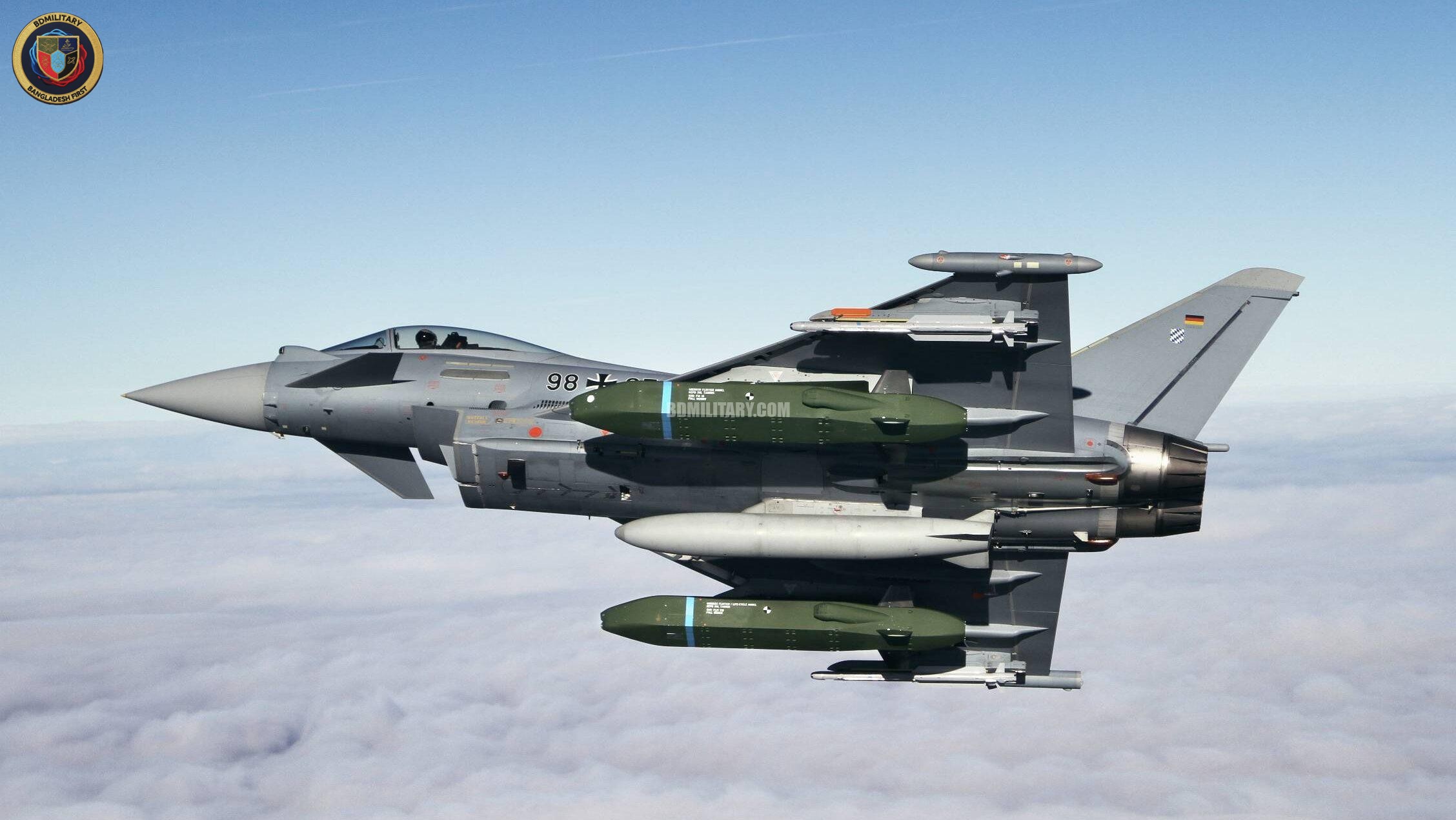
The Eurofighter Typhoon, often floated as a future option for the Bangladesh Air Force, must now be viewed in a starkly different light. Its high cost, complex multinational supply chain, and political constraints were already significant drawbacks. But after Europe’s coordinated pressure campaign, the hidden price of acquiring Eurofighter has become undeniable: political leverage. A frontline fighter fleet dependent on European goodwill would be a strategic vulnerability, not an asset. If Europe could attempt to weaponise trade relations over passenger jets, there is no reason to believe that the availability of spare parts, weapon integration approvals, or long-term maintenance rights would remain free from similar political interference. No nation can afford to place its defence posture at the mercy of such unreliable partners.
Bangladesh must instead reinforce its path toward independent, politically secure procurement. The Air Force has already demonstrated confidence and success with the J-10CE, a capable multirole fighter acquired without external political baggage. Expanding this fleet is the most logical and strategically sound course of action, allowing Bangladesh to build numbers, capability, and deterrence without yielding sovereignty. While European options come with pressure, conditions, and complications, China has consistently respected Bangladesh’s autonomy and delivered reliable systems tailored to Dhaka’s requirements. A larger, unified J-10CE force would give Bangladesh a coherent, powerful, and politically unencumbered air combat capability.
At the same time, Bangladesh must look beyond the present and invest in the future. Türkiye’s rise as an independent aerospace power offers Dhaka a rare opportunity: access to advanced next-generation capability without the geopolitical manipulation characteristic of Western suppliers. The Turkish Kaan fighter, now progressing steadily through its development phases, represents an ideal long-term solution for Bangladesh—combining advanced technology, favourable political alignment, and freedom from coercive diplomacy. Ankara has shown itself to be a steadfast partner that respects Bangladesh’s sovereignty, and Dhaka should position itself early to secure future procurement of Turkish combat aircraft as the programme matures.
Bangladesh faces no illusions: foreign attempts to shape, restrict, or hinder its defence modernisation are very real. The Airbus incident is not a one-off misstep; it is a glimpse of the kind of pressure that will continue as Bangladesh strengthens its armed forces and expands its strategic autonomy. External actors will continue probing for weaknesses, attempting to influence decisions, and seeking to insert themselves into Bangladesh’s procurement calculations. It is imperative that Dhaka recognise these attempts early and respond with firm, unwavering clarity.
The episode involving Airbus must serve as a strategic warning. Bangladesh cannot afford to become dependent on any supplier that views coercion as a legitimate tool of diplomacy. The nation’s defence choices must be guided solely by military need, cost-effectiveness, and long-term sovereignty—not by diplomatic pressure or external agendas. By rejecting Europe’s pressure, strengthening its J-10CE fleet, and aligning with Türkiye’s emerging Kaan programme, Bangladesh can chart a defence modernisation path that is credible, affordable, and entirely free from foreign manipulation.
Bangladesh must remain vigilant, decisive, and uncompromising in the defence of its sovereignty. The country has made it clear that it will not be pressured—and that stance must remain the bedrock of every major procurement decision going forward. The nation’s security depends not only on the aircraft it operates, but on its ability to resist those who would interfere with its right to choose them.

Amit Bhattacharya is a leading defence procurement expert with deep expertise in modern weapon systems and military hardware acquisition. Over more than a decade, he has collaborated with top defence contractors and strategic research institutions, delivering incisive analysis on procurement frameworks, capability development, and technology integration for armed forces worldwide. Amit bridges the gap between operational requirements and industrial capacity, providing authoritative evaluations of modernisation programmes, defence budgets, and acquisition reforms in both established and emerging defence markets. He leads the Defence Procurement and Defence Industry sections at BDMilitary, shaping strategic discourse on defence innovation. Amit earned his Master of Policy and Governance (MPAG) from the University of Canterbury, New Zealand, complementing his practical expertise with advanced policy and governance insight.