The assassination of Sharif Osman Hadi has plunged South Asia’s diplomatic landscape into unprecedented uncertainty, with India increasingly on the backfoot as tensions with Bangladesh reach what analysts are calling a historic low. Hadi was shot on 12 December 2025 at 2:25 p.m. (BST) in Dhaka’s Paltan area and later died in Singapore on 18 December 2025, sparking nationwide outrage. His killing occurred only weeks after the interim government received the long-awaited Peelkhana Investigation Committee Report, which alleged Indian involvement in a conspiracy alongside local actors to destabilise Bangladesh’s military and paramilitary forces, including the Bangladesh Army and Bangladesh Rifles (BDR). Observers suggest that Hadi’s assassination may be part of a broader campaign aimed at weakening Bangladesh’s internal security infrastructure, raising serious concerns about the country’s sovereignty and the fragile balance of power in the region.
Hadi, 32, was the spokesperson for the pro-democracy group Inquilab Mancha and an independent candidate in the 12 February 2026 national election. He was ambushed by masked assailants on a motorcycle as he left a mosque in Dhaka’s Bijoynagar district. He received initial treatment at Dhaka Medical College Hospital before being airlifted to Singapore General Hospital on 15 December, where he ultimately succumbed to his injuries on 18 December. Within hours of the news, street protests erupted across Dhaka and other major cities, peaking between 18–19 December. Demonstrators attacked media offices and vandalised public property, with anti-India and anti-establishment slogans dominating the streets, reflecting a deep-seated public anger and a sense of betrayal among Bangladeshis over foreign interference in national affairs.
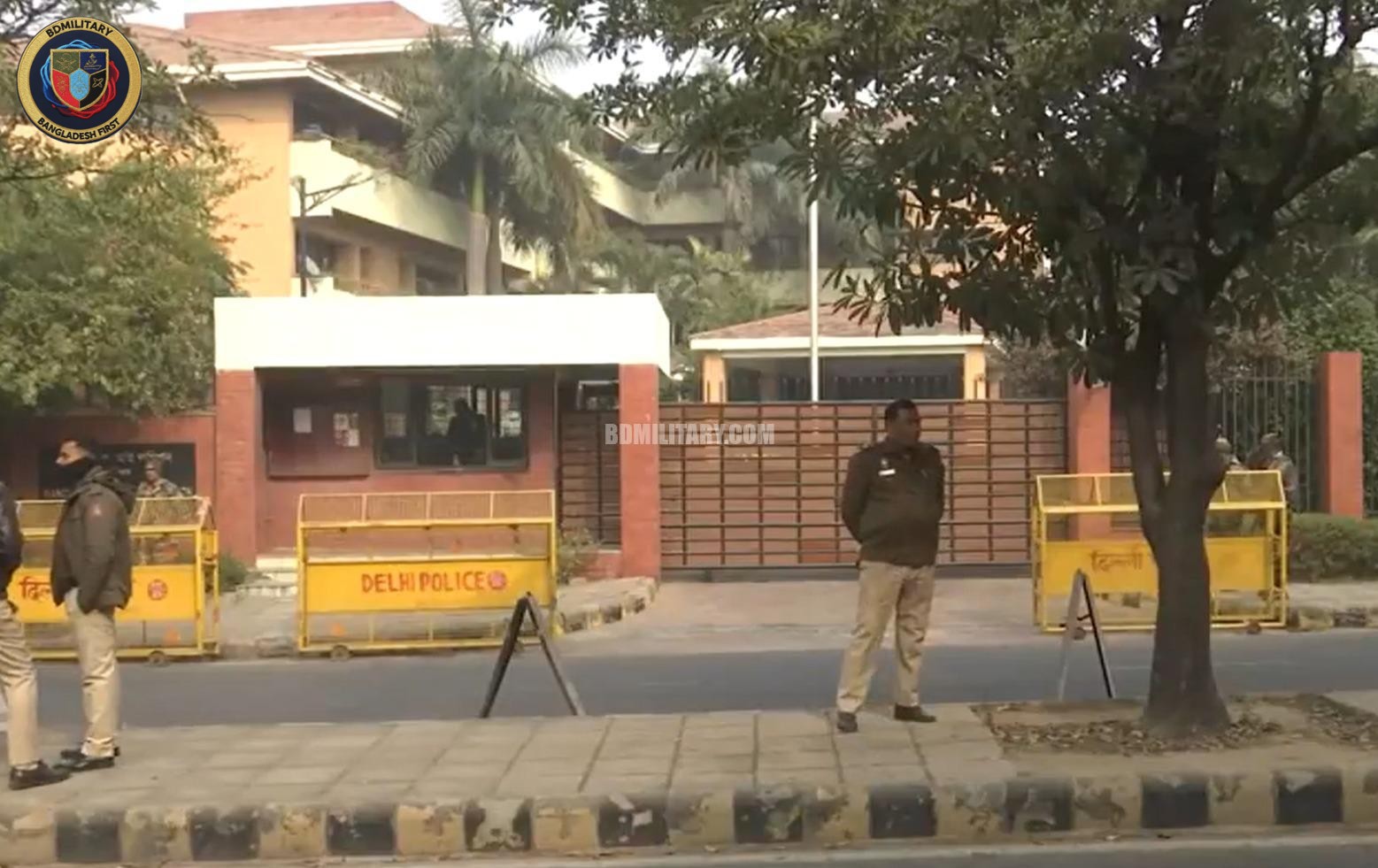
The immediate response from India was cautious but indicative of the seriousness of the situation. On 23 December 2025 at 11:55 p.m. IST, India summoned Bangladesh’s High Commissioner, Riaz Hamidullah, urging Dhaka to conduct a “proper probe” while emphasising diplomatic channels. Despite the gravity of the situation, there were no official press conferences, and Prime Minister Narendra Modi avoided making any public comments, signalling a careful, measured approach by New Delhi amid intense scrutiny. Additional security measures were deployed at Bangladeshi missions in India to prevent extremist attacks, reflecting concerns over possible retaliatory or opportunistic violence. Analysts argue that India miscalculated both the Bangladeshi government’s stance and public sentiment, leaving New Delhi scrambling to contain diplomatic damage.
Youth activists in Bangladesh have intensified their protests, demanding that international investigative agencies, such as the FBI or Scotland Yard, join domestic law enforcement in tracing Hadi’s assassins and the planners behind the attack. These protests underscore a lack of confidence in domestic investigative capacities and a growing insistence on international oversight to ensure transparency and accountability. The demonstrations have drawn support from students, civil society organisations, and opposition figures, highlighting a broad-based societal demand for justice and protection of national sovereignty. Social media campaigns and street marches have amplified these calls, putting additional pressure on the interim government to act decisively.
The geopolitical dimensions of the crisis have also become increasingly evident. The United States has openly signalled support for Bangladesh, with US Special Envoy Gore meeting Nobel laureate and Interim Chief Adviser Prof. Mohammed Yunus to reaffirm Washington’s backing for Dhaka’s interim government and its forthcoming elections. Reports indicate that the US is applying pressure on India to reduce support for former Prime Minister Sheikh Hasina and the Awami League, signalling a potential shift in the regional balance of power. Analysts suggest that Washington’s engagement reflects not only a concern for Bangladesh’s stability but also a broader strategic interest in limiting India’s unilateral influence in South Asia.
The Peelkhana Investigation Committee Report, which preceded Hadi’s assassination, had already heightened tensions. The report alleges a historical pattern of covert operations by Indian intelligence to undermine Bangladesh’s military and paramilitary forces, ostensibly to destabilise the country and influence political outcomes. The timing of Hadi’s assassination, coming shortly after the report’s release, has led to widespread speculation that it may have been a retaliatory measure intended to intimidate reformist elements within Bangladesh and discourage further scrutiny of cross-border interference. The convergence of these events has brought Bangladesh–India relations to a historic low, with trust between the two governments eroding rapidly and public anger in Bangladesh against India reaching unprecedented levels.
The security situation in Bangladesh remains tense, with authorities deploying additional forces around key government buildings, military installations, and diplomatic missions to prevent escalation. Analysts warn that continued unrest could disrupt the electoral process scheduled for 12 February 2026, which would primarily benefit the Awami League, the only party positioned to exploit a postponed or chaotic election. Such disruption could provide political leverage to entrenched interests while undermining the credibility of Bangladesh’s democratic institutions.
India’s position in this crisis is further complicated by domestic considerations. The Modi government’s cautious approach, including the absence of public statements from the Prime Minister, reflects an awareness of the delicate political and security implications. With international scrutiny intensifying, New Delhi faces the dual challenge of managing perceptions at home while attempting to repair its strained relationship with Dhaka. Missteps in diplomacy or intelligence could further weaken India’s influence in Bangladesh and provoke criticism from regional and global partners.
For Bangladesh, the assassination has underscored the urgent need for credible investigations and transparent justice. The interim government has committed to a fast-track trial under the Speedy Trial Tribunal Act, aiming to conclude proceedings within 90 days of the police report. However, youth protesters and civil society actors argue that domestic mechanisms alone may be insufficient to deliver impartial outcomes, reinforcing calls for international investigative involvement. The situation represents a test not only of governance but also of Bangladesh’s ability to safeguard sovereignty and maintain public trust amid external pressures.
The wider implications for South Asia are significant. The crisis demonstrates the fragility of regional alliances and the limits of India’s influence over smaller neighbours. With the US actively backing Bangladesh, India may face constraints in pursuing unilateral strategies, while Bangladesh gains leverage in defending its territorial integrity and political autonomy. How New Delhi and Dhaka manage this crisis will shape the trajectory of bilateral relations and regional geopolitics for years to come, influencing security, trade, and political dynamics across South Asia.
The assassination of Sharif Osman Hadi has catalysed a convergence of domestic unrest, international scrutiny, and diplomatic tensions. Youth protests, heightened security, and active US engagement underscore the fragile balance of power in the region. As Bangladesh approaches its 12 February 2026 elections, the coming weeks will determine whether justice, stability, and bilateral relations can be preserved or if the crisis will further empower entrenched political interests such as the Awami League.

Ayesha Farid is a regional security specialist focusing on South Asia, with over a decade of experience analysing inter-state tensions, cross-border insurgency, and regional power dynamics. She has worked with leading policy think tanks and academic institutions, offering nuanced insights into the complex security challenges shaping the subcontinent. Ayesha’s expertise spans military doctrines, border disputes, and regional cooperation frameworks, making her a vital contributor to BDMilitary’s coverage of South Asian strategic affairs. She leads the Geopolitics & Diplomacy section at BDMilitary. Ayesha holds a dual master’s degree — a Master in International Relations from the IE School of Politics, Economics & Global Affairs, Spain, and a Master of Public Policy from the Munk School of Global Affairs, University of Toronto, Canada — combining deep academic insight with practical policy expertise.