Suspending Visas Is Understandable—but Retreat Is Not an Option
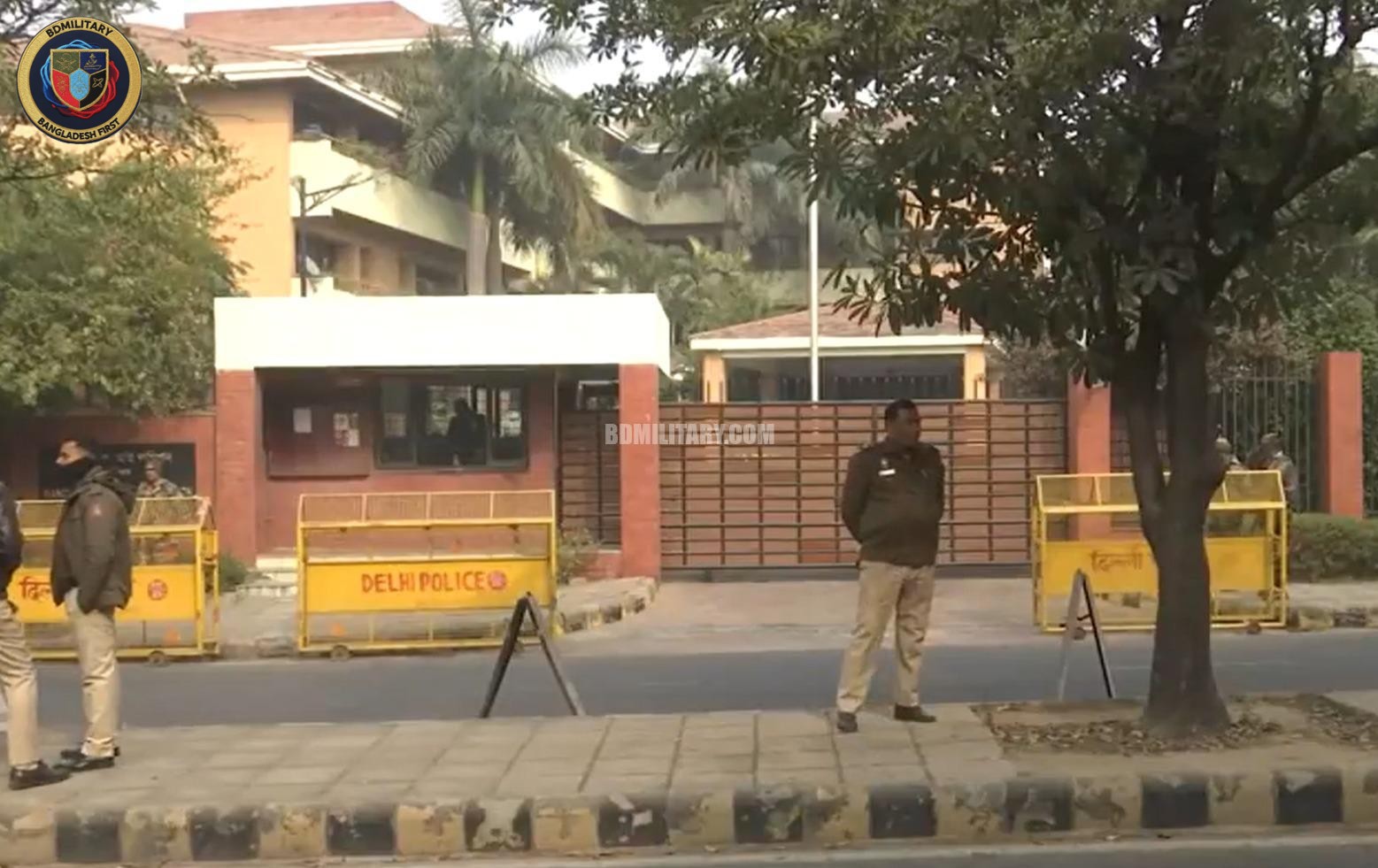
The Bangladesh Ministry of Foreign Affairs’ decision to suspend the issuance of visas to Indian citizens through its missions in New Delhi and Agartala following attacks and intimidation is understandable in the immediate context of staff safety. Any assault on diplomatic premises or personnel is unacceptable and must be condemned unequivocally. Yet while such a temporary measure may be necessary to stabilise an acute situation, it must not become a substitute for strategy. The long-term answer to coercion is not contraction, but reinforcement.
Bangladesh’s diplomatic presence in India is a pillar of national security, not a discretionary convenience. India is our closest neighbour, a major economic partner, and a decisive actor in regional politics. Curtailing consular services and reducing manpower—however reluctantly—risks signalling vulnerability at precisely the moment when hostile non-state actors seek to narrow Bangladesh’s footprint. Militant right-wing Hindu extremist outfits thrive on intimidation; their objective is to force disengagement so that pressure, harassment, and attacks against Bangladesh can proceed with less scrutiny and fewer consequences. Any sustained rollback would inadvertently serve that aim.
The visa suspension should therefore be treated as a short-term safety valve, not a policy direction. The strategic imperative is to ensure continuity of operations by strengthening protection. Bangladesh should urgently consider allocating trained personnel from the Bangladesh Police’s Special Protection Battalion (SPBN) and, where appropriate, a small Quick Reaction Force (QRF) element from Border Guard Bangladesh (BGB) to its High Commission and other missions in India. This would add a vital layer of deterrence and response capability while remaining consistent with diplomatic norms and the Vienna Convention, under which host-state security responsibilities can be complemented by mission-level measures.
SPBN units are purpose-built for the protection of high-value targets and sensitive facilities. Their presence would reassure diplomats and staff, deter hostile reconnaissance and intimidation, and enable rapid response during flashpoints. A limited, clearly mandated QRF—focused on perimeter security, emergency response, and evacuation planning—would further enhance resilience without militarising diplomacy. Such layered security arrangements are standard practice globally in higher-risk environments and are best implemented in close coordination with Indian authorities.
Importantly, increasing diplomatic presence is not an affront to India’s sovereignty nor a challenge to bilateral ties. On the contrary, it reflects a shared interest in preventing extremist violence and preserving normal state-to-state engagement. India, as a responsible regional power, has both the capacity and the obligation to protect foreign missions; Bangladesh’s reinforcement would be complementary, transparent, and cooperative.
There is also a duty of care to Bangladeshi citizens. Students, patients, workers, and travellers in India rely on consular services. Prolonged suspension of visas and reduced staffing undermine assistance, erode people-to-people links, and create information gaps at a time when situational awareness is most needed. Visibility and engagement enhance security; silence and absence do not.
Critics argue that lowering profile reduces risk. Experience suggests the opposite. Extremists interpret closures and cutbacks as success, which encourages further pressure. A confident state adapts and persists. By condemning attacks, stabilising operations, and simultaneously reinforcing protection, Bangladesh would send a clear message: intimidation will not dictate our foreign policy.
The path forward is therefore clear. Resume services as soon as conditions allow, backed by strengthened security; expand coordination with Indian authorities; and increase—not diminish—Bangladesh’s diplomatic footprint within India. Engagement inside India is essential for safeguarding national interests. Retreat would only embolden those who seek to do Bangladesh harm.

Khaled Ahmed is a seasoned former intelligence analyst and military expert from the Netherlands, bringing over 15 years of specialised experience in operational intelligence, threat analysis, and strategic defence planning. Having served in high-level, classified roles within Dutch military intelligence, he possesses rare expertise in European security architecture, NATO doctrine, and asymmetric warfare. Khaled’s deep operational insight and international perspective enable him to deliver precision-driven intelligence analysis and forward-looking strategic forecasts. A trusted contributor to high-level risk assessments and security briefings, he offers readers clarity on complex defence and security challenges. Khaled leads the National Security and Fact Analysis sections at BDMilitary. He holds a Master’s degree in International Relations from the University of Groningen, The Netherlands, and is fluent in Dutch, French, and Arabic — combining linguistic dexterity with operational expertise to analyse security issues across cultures and regions.